Tuesday, 12 July 2016

Logarithm with the Examples [Page 1]

Now I want to let you know about Logarithm, I also provide the example of it so you can understand how their works..

What is an Exponent?

2 cubed
The exponent of a number says how many timesto use the number in a multiplication.
In this example: 23 = 2 × 2 × 2 = 8
(2 is used 3 times in a multiplication to get 8)
What is a Logarithm?
Logarithm goes the other way.
It asks the question "what exponent produced this?":
Logarithm Question
And answers it like this:
In that example:
  • The Exponent takes 2 and 3 and gives 8 (2, used 3 times, multiplies to 8)
  • The Logarithm takes 2 and 8 and gives 3 (2 makes 8 when used 3 times in a multiplication)

A Logarithm says how many of one number to multiply to get another number

So a logarithm actually gives you the exponent as its answer:
logarithm concept
(Also see how Exponents, Roots and Logarithms are related.)

Working Together

Exponents and Logarithms work well together because they "undo" each other (so long as the base "a" is the same):
Exponent vs Logarithm
They are "Inverse Functions"
Doing one, then the other, gets you back to where you started:
  • Doing ax, and then the logarithm, gives you x back again:Log a (a^x)
  • Doing the logarithm, then ax , gives you x back again: a^(log a (x))
It is too bad they are written so differently ... it makes things look strange.
So it may help you to think of ax as "up" and loga(x) as "down":
  • going up, then down, returns you back again: down(up(x)) = x , and
  • going down, then up, returns you back again: up(down(x)) = x
Anyway, the important thing is that:
The Logarithmic Function can be "undone" by the Exponential Function.
(and vice versa)
Like in this example:

Example, what is x in log3(x) = 5

We can use an exponent (with a base of 3) to "undo" the logarithm:
Start withlog3(x) = 5
We want to "undo" the log so we can get "x ="
Use the Exponential Function (on both sides!):3^(log3(x))=3^5
And we know that 3^(log3(x))=x, so:x = 35
Answer:x = 243
And also:

Example: Calculate y in y= log(1/4)

Start withy=log4(1/4)
Use the Exponential Function on both sides:4^y=4^( log4(1/4) )
Simplify:4y = 1/4
Now a simple trick: 1/4 = 4-1
So:4y = 4-1
And so:y = -1

Practice with Statistical Data

To gain your knowledge, you need to have practice your mind first. So this is the example for you..

Problems on statistics and probability are presented. The answers to these problems are at the bottom of the page.
  1. Given the data set 

    4 , 10 , 7 , 7 , 6 , 9 , 3 , 8 , 9 

    Find:

    a) the mode, 

    b) the median, 

    c) the mean, 

    d) the sample standard deviation. 

    e) If we replace the data value 6 in the data set above by 24, will the standard deviation increase, decrease or stay the same? 

  2. Find x and y so that the ordered data set has a mean of 42 and a median of 35. 

    17 , 22 , 26 , 29 , 34 , x , 42 , 67 , 70 , y 

  3. Given the data set 

    62 , 65 , 68 , 70 , 72 , 74 , 76 , 78 , 80 , 82 , 96 , 101, 

    Find; 

    a) the median, 

    b) the first quartile, 

    c) the third quartile, 

    c) the interquartile range (IQR). 

  4. The exam grades of 7 students are given below. 

    70 , 66 , 72 , 96 , 46 , 90 , 50 

    Find 

    a) the mean 

    b) the sample standard deviation 

  5. Twenty four people had a blood test and the results are shown below. 
    A , B , B , AB , AB , B , O , O , AB , O , B , A

Firstly, you try to answer the questions  above. If you not sure your answers, you may look the correct answer on the bottom..

So Good Luck to you!


Answers to the Above Questions
    1. The given data set has 2 modes: 7 and 9
    2. order data : 3 , 4 , 6 , 7 , 7 , 8 , 9 , 9 , 10 : median = 7
    3. (mean) : m = (3+4+6+7+7+8+9+9+10) / 9 = 7

    4. xx - m(x - m)2
      4-39
      1039
      700
      700
      6-11
      924
      3-416
      811
      924
      sum = 44


      sample standard deviation = 2.35 (rounded to 2 decimal places) 
    5. The standard deviation will increase since 24 is further from away from the other data values than 6.

  1.   x = 36 , y = 77 
    1. median = 75 
    2. first quartile = 69 
    3. third quartile = 81 
    4. interquartile range = 81 - 69 = 12

    1. mean = 70 
    2. sample standard deviation = 18.6 (rounded to 1 decimal place)

    1. classfrequency
      A5
      B6
      AB6
      O7

    2. 1 - (7/24) = 17/24 = 0.71 (rounded to 2 decimal places)

Practice with Mean, Mode, Median.

An example of Measure of Central Tendency questionnaires, you will need paper, pencil and calculator to practice.. 


1. The weekly salaries of six employees at McDonald's are $140, $220, $90, $180, $140, $200.  For these six salaries, find: 
(a) the mean 
(b) the median 
(c) the mode.


2. Andy has grades of 84, 65, and 76 on three math tests.  What grade must he obtain on the next test to have an average of exactly 80 for the four tests?


3. a.)  A store owner kept a tally of the sizes of suits purchased in her store. Which measure of central tendency should the store owner use to describe the average size suit sold? 

b.)  A tally was made of the number of times each color of crayon was used by a kindergarten class.  Which measure of central tendency should the teacher use to determine which color is the favorite color of her class?  

c.)  The science test grades are posted.  The class did very well.  All students taking the test scored over 75.  Unfortunately, 4 students were absent for the test and the computer listed their scores as 0 until the test is taken.  Assuming that no score repeated more times than the 0's, what measure of central tendency would most likely give the the best representation of this data?


4. In January of 2006, your family moved to a tropical climate.  For the year that followed, you recorded the number of rainy days that occurred each month.  Your data contained 14, 14, 10, 12, 11, 13, 11, 11, 14, 10, 13, 8.

a.  Find the mean, mode, median and range for your data set of rainy days.

b.  If the number of rainy days doubles each month in the year 2007, what will be
     the mean, mode, median and range for the 2007 data?

c.  If, instead, there are three more rainy days per month in the year 2007, what will
    be the mean, mode, median and range for the 2007 data?   


5. 

The values of 11 houses on Washington Street are shown in the table.
a.  Find the mean value of these houses in dollars.
b.  Find the median value of these houses in dollars.c.  State which measure of central tendency, the mean or the median, best represents the values of these 11 houses.  Justify your answer

Answer

6. Test scores for a class of 20 students are as follows:
93, 84, 97, 98, 100, 78, 86, 100, 85, 92, 72, 55, 91, 90, 75, 94, 83, 60, 81, 95 

Test
Scores
Frequency
91-100 
81-90 
71-80 
61-70
51-60 

a) Copy and complete the table shown at the left.
b) Find the modal interval. The "modal interval" is the interval containing the greatest frequency.  It is not the mode.
c) Find the interval that contains the median. 


So have a try the questions above. If you don't sure your answers, you may click the correct "Answer".

Practice with Arithmetic & Geometric sequence and series


Solve the following problems related to arithmetic and geometric sequences and series .
Look carefully at each question to determine the " who " your work order. 
You might want to have your graphing calculator handy.

1. Find the sum of the first term of the sequence 4, 6, 8, 10, .... Answer


2. Find the sum of the first term of the sequence -8, -5, -2, ..., 7  Answer


3. Find a6 for an arithmetic sequence where a= 3x+1 and d = 2x+6. Answer


4. How many terms of the arithmetic sequence -3, 2, 7, ... must be added together for the sum of the series to be 116?  Answer


5. Find the 9th term of the sequence:  Answer


6. Evaluate this series using a formula:   Answer


7. Insert three geometric means between 1 and 81. Answer


8. Find t12 for a geometric sequence where   t= 2 + 2i   and   r = 3.  Answer


9. A display of cans on a grocery shelf consists of 20 cans on the bottom, 18 cans in the next row, and so on in an arithmetic sequence, until the top row has 4 cans.  How many cans, in total, are in the display?  Answer


10. Find the indicated sum:   Answer


11. Given the sequence -4, 0, 4, 8, 12, ..., Darius devises a formula for the sum of nterms of the sequence.  His formula is
Is this formula correct?  Show work to support your answer.


12. Which of the following choices is the formula for the nth term of the sequence 54, 18, 6, ... ?  

  • m12a
  • m12b
  • m12c
  • m12d

You may try the question above to gain your knowledge..


Thursday, 23 June 2016

Statistical Data

What is Data??
Data is a collection of facts, such as numbers, words, measurements, observations or even just descriptions of things.

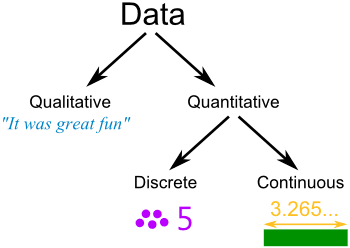
Qualitative vs Quantitative

Data can be qualitative or quantitative.
  • Qualitative data is descriptive information (it describes something)
  • Quantitative data is numerical information (numbers)
Types of Data

And Quantitative data can also be Discrete or Continous:
  • Discrete data can only take certain values (like whole numbers)
  • Continous data can take any value (within a range)

More Examples:
Qualitative:
  • Your friends' favorite holiday destination
  • The most common given names in your town
  • How people describe the smell of a new perfume
Quantitative:
  • Height (Continuous)
  • Weight (Continuous)
  • Petals on a flower (Discrete)
  • Customers in a shop (Discrete)

Discrete and Continous Data
Data that can be Descriptive (like "high" or "fast") or Numerical (numbers)

And Numerical Data can be Discrete or Continuous:
Discrete data is counted,
Continuous data is measured

Discrete Data
Can only take a certain values.

Which is the number of students in the class (you can't have half a student)
For example: the number of the rooling dice; can only have the values 2, 3, 4, 5, 6, 7, 8, 9,  10, 11 and 12


Continous Data
Can take any values (within a range)

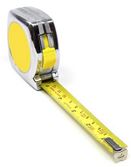
Tape MeasureExamples:
  • A person's height: could be any value (within the range of human heights), not just certain fixed heights,
  • Time in a race: you could even measure it to fractions of a second,
  • A dog's weight,
  • The length of a leaf,
  • Lots more!

Question with solution of Indices..

This is the question for you..

To understand the way to solve it, you have to doing an exercise from some of the question.


Question #1


Solution:


Question #2


Solution:


Question #3


Solution:


Question #4


Solution:


Now, you may try one of the questions above to know how it works..

GOOD LUCK!

Wednesday, 22 June 2016

Measure of Central Tedency

The meaning of Measure of Central Tedency..

A measure of central tendency is a single value that attempts to describe a set of data by identifying the central position within that set of data. As such, measures of central tendency are sometimes called measures of central location
They are also classed as summary statistics. The mean (often called the average) is most likely the measure of central tendency that you are most familiar with, but there are others, such as the median and the mode.
The mean, median and mode are all valid measures of central tendency, but under different conditions, some measures of central tendency become more appropriate to use than others. 
In the following sections, we will look at the mean, mode and median, and learn how to calculate them and under what conditions they are most appropriate to be used.


Mean is an Average which mean the sum of data divided by the number of data (Do not round your answer unless directed to do so.)

Median is the Middle value, or the mean of the middle two values, when the data is arranged in numerical order. Think of a "median" being in the middle of a highway.

Mode is the value (number) that appear the Most. It is possible to have more than one mode, and it is possible to have no mode. If there is no mode-write "no-mode", do not write zero (0).


Consider this set of test score values:


Two sets o scores above is the same except for the first score. Set on the left shows the actual score. Set on the right shows what would happen if one of the score is WAY out of range with respect to the other score. Such a period is called outliers. With outliers, the mean change. With outliers, the median is unchanged.


How do I know which measure of central tedency to use?

MEAN

Use the mean to describe the middle of a set of data that does not have an outlier.

Advantages:

• Most popular measure in fields such as business, engineering and computer science.
• It is unique - there is only one answer.
• Useful when comparing sets of data.

Disadvantages:

• Affected by extreme values (outliers)


MEDIAN

Use the median to describe the middle of a set of data that does have an outlier.

Advantages:
• Extreme values (outliers) do not affect the median as strongly as they do the mean.
• Useful when comparing sets of data.
• It is unique - there is only one answer.

Disadvantages:

• Not as popular as mean.


MODE

Use the mode when the data is non-numeric or when asked to choose the most popular item.

Advantages:
• Extreme values (outliers) do not affect the mode.

Disadvantages:
• Not as popular as mean and median.
• Not necessarily unique - may be more than one answer
• When no values repeat in the data set, the mode is every value and is useless.
• When there is more than one mode, it is difficult to interpret and/or compare.


This is the example to find the Mean, Median and Mode;

Example #1

Find the mean, median and mode for the following data:  5, 15, 10, 15, 5, 10, 10, 20, 25, 15.
                           (You will need to organize the data.)
                   5, 5, 10, 10, 10, 15, 15, 15, 20, 25
Mean:        


Median:     5, 5, 10, 10, 10, 15, 15, 15, 20, 25         
Listing the data in order is the easiest way to find the median. 
The numbers 10 and 15 both fall in the middle.
Average these two numbers to get the median.      10 + 15 = 12.5
                                                                                      2


Mode:    Two numbers appear most often:  10 and 15.
                  There are three 10's and three 15's.
                  In this example there are two answers for the mode.


Example #2      
For what value of  x  will  8 and x have the same mean (average) as 27 and 5?

First, you have to find the mean of 27 and 5:

        27 + 5 = 16
             2

Now, find the x value, knowing that the average of x and 8 must be 16:

        x + 8 = 16           
          2
                          
        32 = x + 8     cross multiply

        -8         - 8
        24 = x           and solve


Example #3                                                                                   

On his first 5 biology tests, Bob received the following scores:  72, 86, 92, 63, and 77.  What test score must Bob earn on his sixth test so that his average (mean score) for all six tests will be 80?  Show how you arrived at your answer.

Possible solution:
         
Set up an equation to represent the situation.  Remember to use all 6 test scores:
                                             72 + 86 + 92 + 63 + 77 + x   =  80
                                                                6

 cross multiply and solve:                 (80)(6) = 390 + x
                                                          480 = 390 + x
                                                        - 390   -390
                                                            90 =          x
                                         Bob must get a 90 on the sixth test.


Example #4     

The mean (average) weight of three dogs is 38 pounds.  One of the dogs, Sparky, weighs 46 pounds.  The other two dogs, Eddie and Sandy, have the same weight.  Find Eddie's weight.

Let x = Eddie's weight        (they weigh the same, so they are both represented by "x".)Let x = Sandy's weight                     

Average:   sum of the data divided by the number of data.

                  x + x + 46 = 38                 cross multiply and solve
                      3(dogs)                              

                 (38)(3) = 2x + 46
                      114 = 2x + 46
                       -46          -46 
                        68 = 2x
                         2      2

                        34 = x     Eddie weighs 34 pounds.